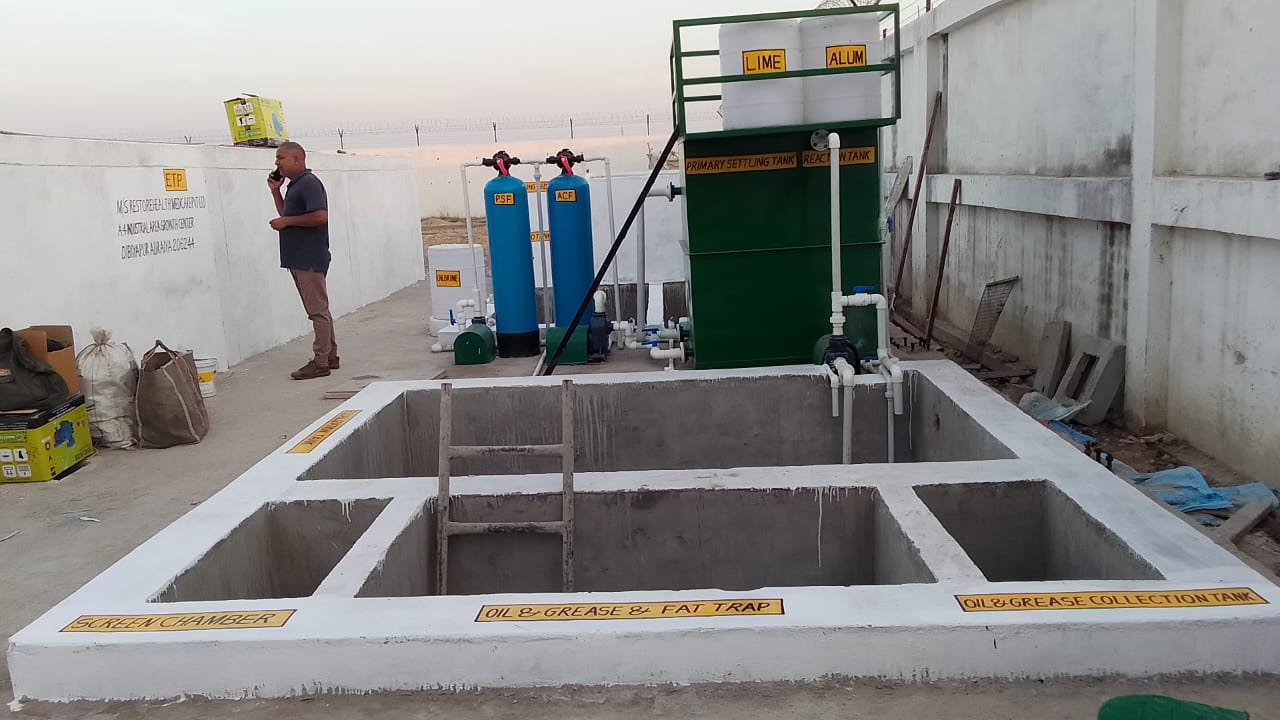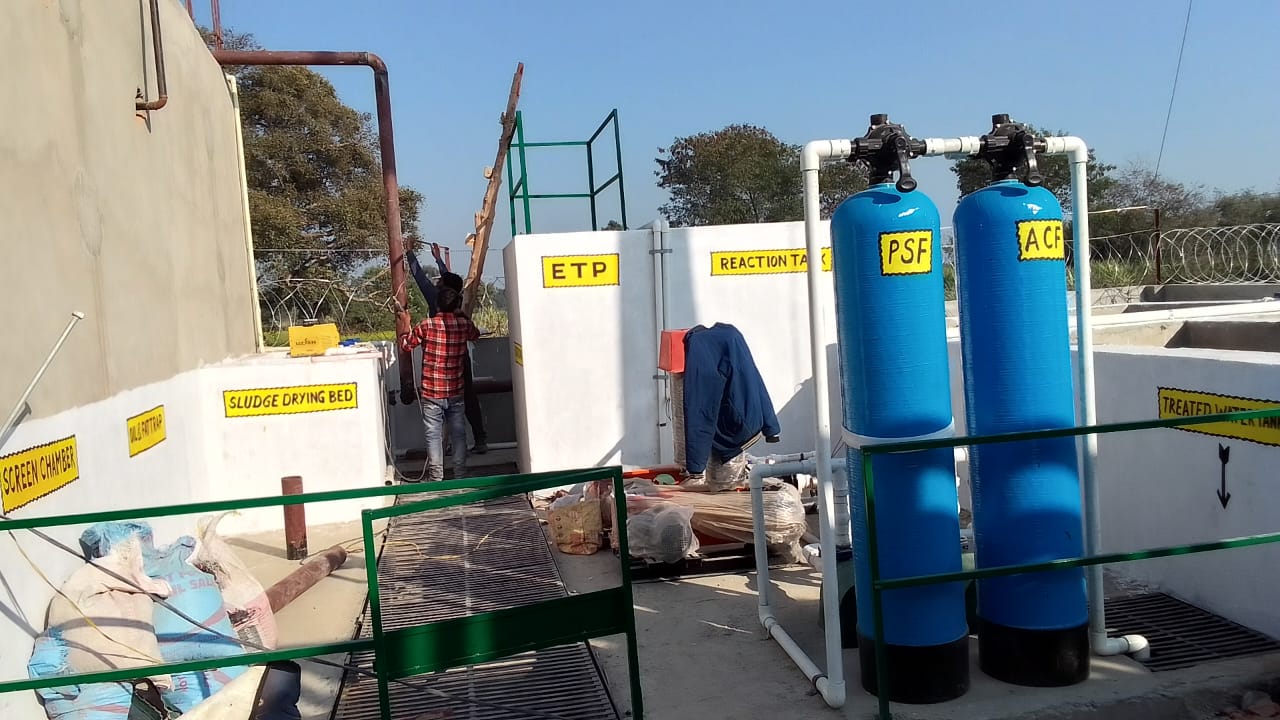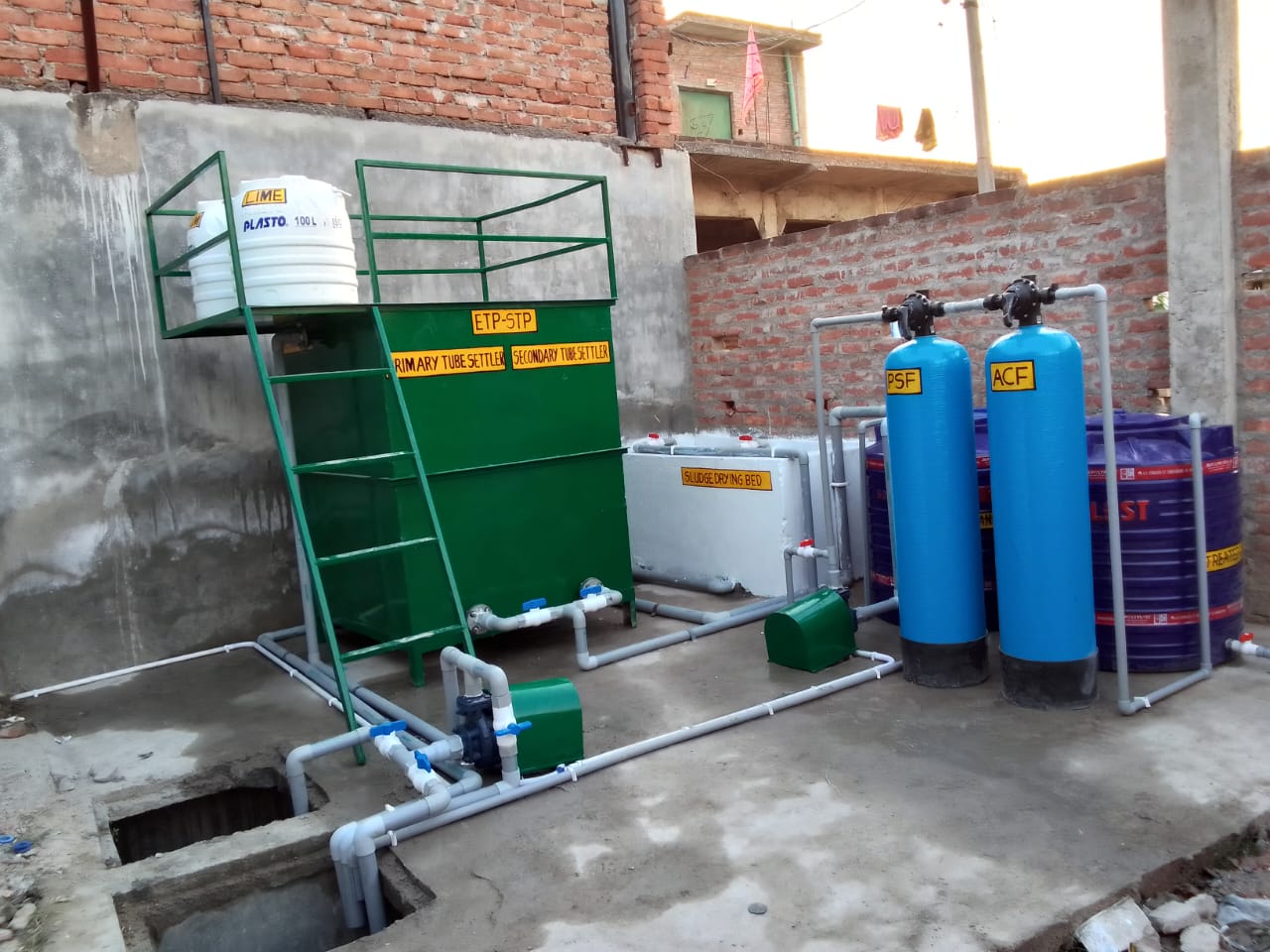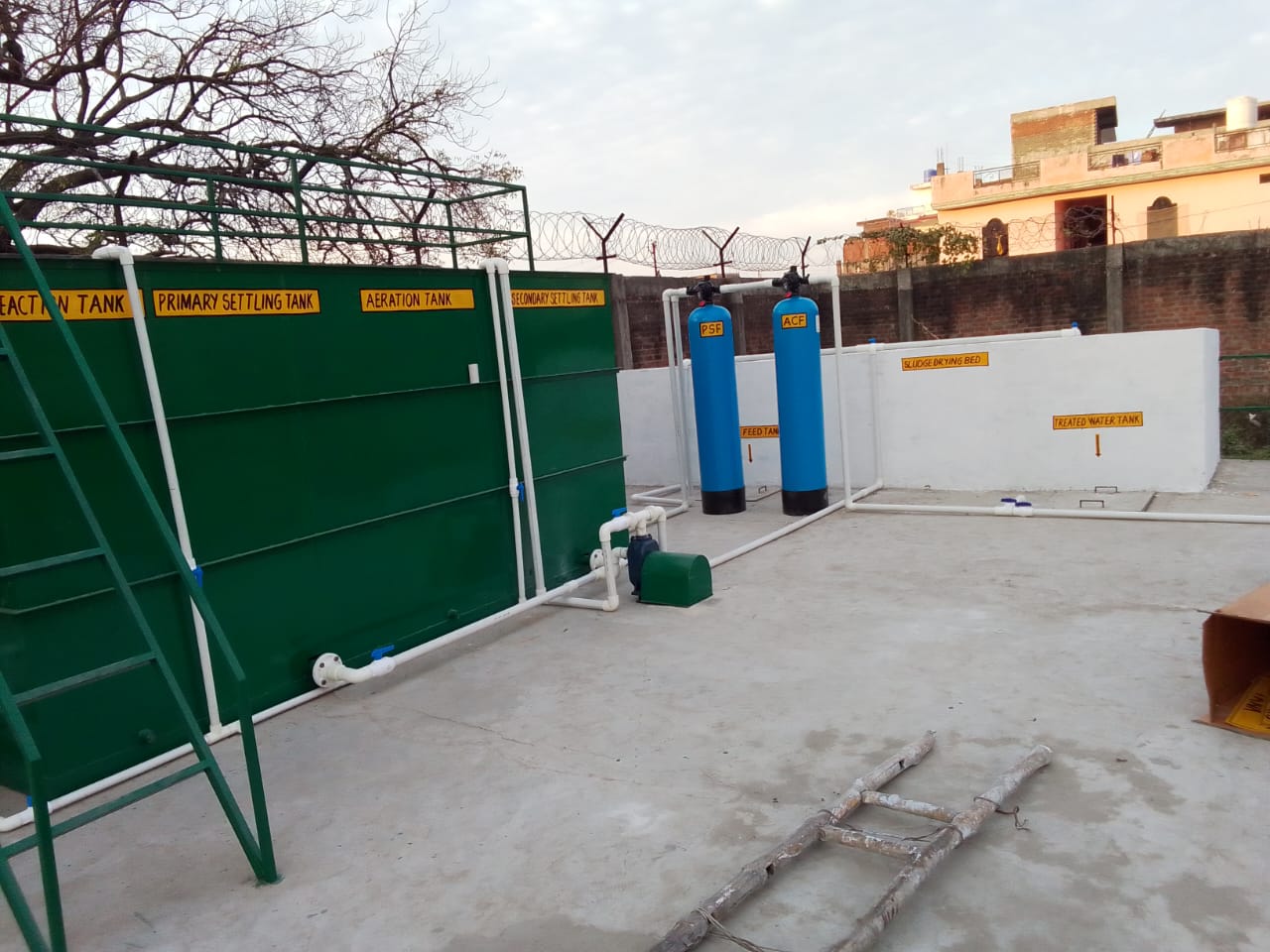
M/S SIDDHI VINAYAK AGRO INDUSTRIES 50 KLD ETP ,Dholpur ,Rajasthan
Engineering Overview
ETP stands for Effluent Treatment Plant. It is a treatment system used in industries to treat wastewater (effluent) before it is discharged or reused. The main objective is to reduce pollutants such as BOD, COD, TSS, oil & grease, colour, chemicals and other contaminants to the required standards. Simple ETP Flow Industrial Wastewater ↓ Collection Tank ↓ Bar Screen ↓ Oil & Grease Trap ↓ Equalization Tank ↓ pH Correction ↓ Coagulation & Flocculation ↓ Primary Clarifier ↓ Biological Treatment / Aeration Tank ↓ Secondary Clarifier ↓ Pressure Sand Filter ↓ Activated Carbon Filter ↓ Disinfection ↓ Treated Water Tank ↓ Reuse / Discharge What happens in each unit? 1. Collection Tank Wastewater from different production areas is collected here. 2. Bar Screen Large materials such as plastic, cloth, paper, fibres and other debris are removed. 3. Oil & Grease Trap Oil and grease are separated from the wastewater. 4. Equalization Tank This is very important. It balances flow and pollutant concentration so that the downstream treatment process receives relatively uniform wastewater. Usually, an air grid/mixer is provided to prevent settling and septic conditions. 5. pH Correction The wastewater pH is adjusted using chemicals such as acid or alkali, depending on the incoming pH. 6. Coagulation & Flocculation Chemicals are added to convert fine/colloidal particles into larger flocs that can settle. Common chemicals may include PAC, alum or polymer, depending on the wastewater. 7. Primary Clarifier The formed solids/flocs settle at the bottom as chemical sludge. 8. Aeration Tank This is the main biological treatment stage. Air is supplied through blowers and diffusers. Microorganisms consume biodegradable organic matter, reducing BOD and part of the COD. 9. Secondary Clarifier Biological sludge settles here. A portion of the sludge is generally returned to the aeration tank (RAS) to maintain the required biomass concentration. 10. Pressure Sand Filter Removes remaining suspended particles and improves treated-water clarity. 11. Activated Carbon Filter Helps remove residual organic matter, colour and odour, depending on the wastewater. 12. Disinfection A disinfectant such as chlorine or another suitable method may be used when microbial control is required. 13. Treated Water Tank The final treated effluent is collected here for reuse or compliant discharge.
Interested in a similar setup?
Connect with our environmental specialists to design an energy-efficient, fully compliant installation tailored to your factory capacity.
Request Project Proposal